Europol Review 2015

Fraud:

EUR 50 billion each year lost to VAT fraud

Missing trader intra-community (MTIC) fraud is a form of organised, sophisticated tax fraud carried out by criminals who attack the value added tax (VAT) regimes of EU Member States. This is not a victimless white collar crime that only affects governments. By depriving EU Member States of tax revenues the criminals are effectively robbing EU citizens. Traditional missing trader intra-community (MTIC) fraud schemes involve goods such as precious metals, mobile phones or high-value portable electronic items. The more damaging organised crime gangs have mutated their activities into intangible markets, such as the environmental and energy sectors.

It is estimated that VAT revenue losses incurred by MTIC fraud alone are between EUR 45 billion and EUR 53 billion each year11. These profits are often used to fund other forms of criminality, such as cigarette smuggling or drugs trafficking.

The basic MTIC fraud model involves at least two Member States. The criminals create a structure of linked companies and individuals across these states who seek to exploit both national and international trading and revenue accounting procedures. Links between participants are disguised to make early detection more difficult. The initial entities responsible for the tax damage, the so-called missing traders, may only be in operation for a few months before disappearing.

Missing Trader Intra-community Fraud Missing Trader Intra-community Fraud

Missing Trader Intra-community Fraud

MTIC fraud causes multi-billion euro losses across EU Member States.

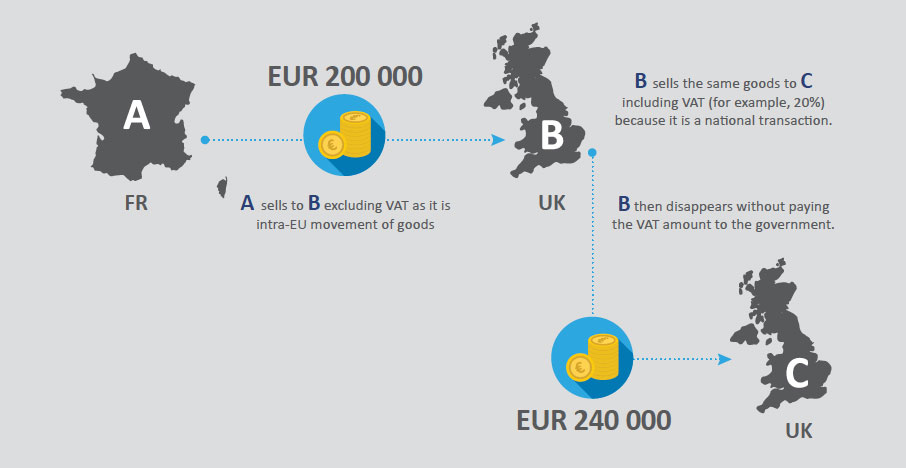
Also known as ‘carousel fraud’, the fraud takes advantage of legislation which allows trading across Member State borders to be VAT free; VAT is only applied to sales within a Member State at the applicable domestic rate. Any VAT charged on sales should be declared and paid to the Member State’s revenue authority. In cases of fraud, the first company in the chain charges VAT to a customer, but does not pay this to the government, becoming what is known as a ‘missing trader’.

Organised crime group behind EUR 320 million fraud scheme dismantled Organised crime group behind EUR 320 million fraud scheme dismantled

Organised crime group behind EUR 320 million farud scheme dismantled

Organised crime group behind EUR 320 million farud scheme dismantled

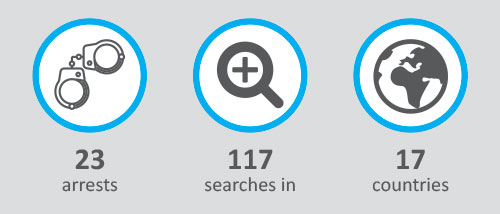
The joint investigation team (JIT) comprising four EU Member States - Czech Republic, Germany, the Netherlands and Poland - and supported by Europol and Eurojust, targeted an organised criminal group behind an MTIC fraud scheme in electronic goods worth EUR 320 million. The same JIT group targeted the organisers and facilitators of ‘alternative banking platforms’ across the globe, which were used to transfer crime-related proceeds and the associated money laundering of several hundred millions of euros. Results: 23 suspects arrested in nine countries; 27 witnesses heard; 117 premises simultaneously searched; assets and equipment seized in 15 EU Member States plus Ukraine and Gibraltar.


CEO fraud causes billion euro losses CEO fraud causes billion euro losses

CEO fraud causes billion euro losses

Europol combats payment order fraud and, since October 2015, focuses more broadly on CEO fraud cases in Europe.

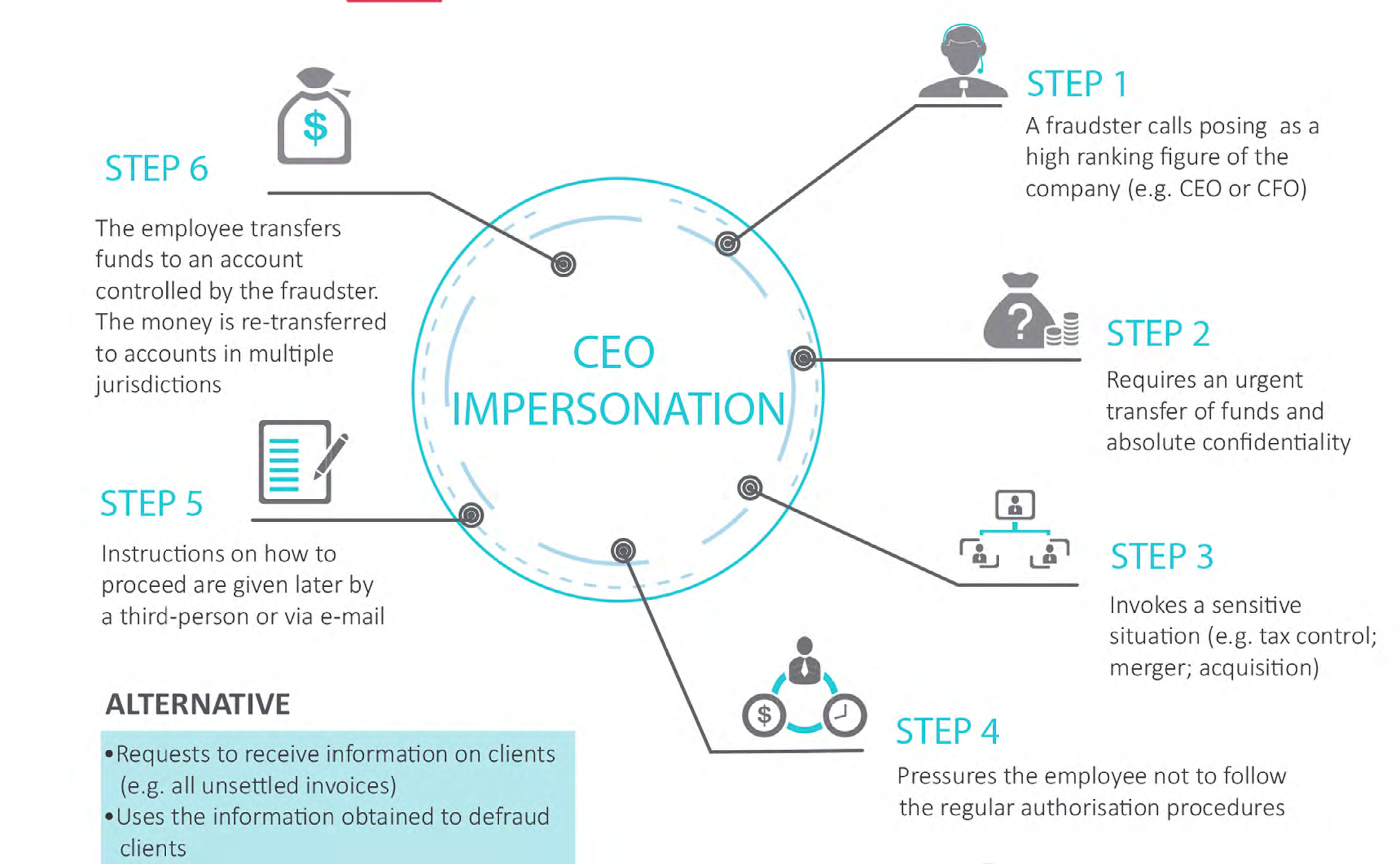
How does CEO fraud work? A fraudster calls a company employee pretending to be a high ranking figure of the company (e.g. CEO or CFO) who requires an urgent transfer of funds and absolute confidentiality. He mentions a sensitive situation such as tax control, merger or acquisition, and pressures the employee not to follow the regular authorisation procedures. The employee then receives information on how to proceed from a third person or via e-mail and transfers the funds to an account controlled by the fraudster. The money is re-transferred to accounts in multiple jurisdictions.

The FBI estimates the total loss to CEO fraud worldwide to be EUR 1.8 billion since 201012. In Europe, it is estimated that in France alone more than 1500 companies lost about half a billion euros in that time13. Other EU Member States are also heavily affected by this type of criminality.

  1. Reported by the FBI at the International Mass Marketing Fraud Working Group in Brussels, November 2015. 12
  2. Reported to Europol by the French Office Central pour la Répression de la Grande Délinquance Financiére. 13
EUR 11 billion lost to cigarette counterfeiting EUR 11 billion lost to cigarette counterfeiting

EUR 11 billion lost to cigarette counterfeiting

Illegal tobacco factories provide organised crime groups with a huge source of income, which often goes towards funding other areas of serious organised crime and terrorism. KPMG’s Project Sun report assesses that in one year (data for 2014) the revenue lost by EU governments to counterfeit and contraband cigarettes equals to EUR 10.9 billion14. Excise fraud affects us all because the lost government revenue could have been spent on vital public services such as schools, hospitals, and law enforcement.

30 million cigarettes-worth of tobacco and cigarettes seized 30 million cigarettes-worth of tobacco and cigarettes seized

30 million cigarettes-worth of tobacco and cigarettes seized

30 million cigarettes-worth of tobacco and cigarettes seized

In February 2015, Europol supported the Hungarian National Tax and Customs Administration to dismantle a massive illegal cigarette factory near Budapest. The action was the result of intensive cooperation between various law enforcement agencies including customs, police and security services from five EU Member States, supported by Europol.

Participants:

  • 5 Member States (Bulgaria, Czech Republic, Hungary, Netherlands, Slovakia)
  • Europol

Results:

  • 9 arrests of the Bulgarian organised crime group members who ran the factory
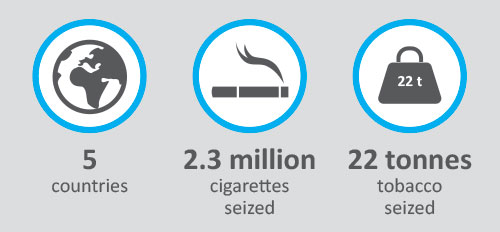
  • 2.3 million cigarettes and 22 tonnes of tobacco – this amount would be enough to produce 30 million more cigarettes
  • Complete, massive illegal cigarette factory dismantled.

The support Europol provided included intelligence sharing and development, crime analysis, and coordinated international collaboration and interventions. Europol also deployed a mobile office to the operational control unit in Budapest. This allowed information gathering during the raid, which was cross-matched against Europol's databases. Real-time feedback was then provided to officers on the ground during the operation.

Global action against online fraudsters Global action against online fraudsters

Global action against online fraudsters

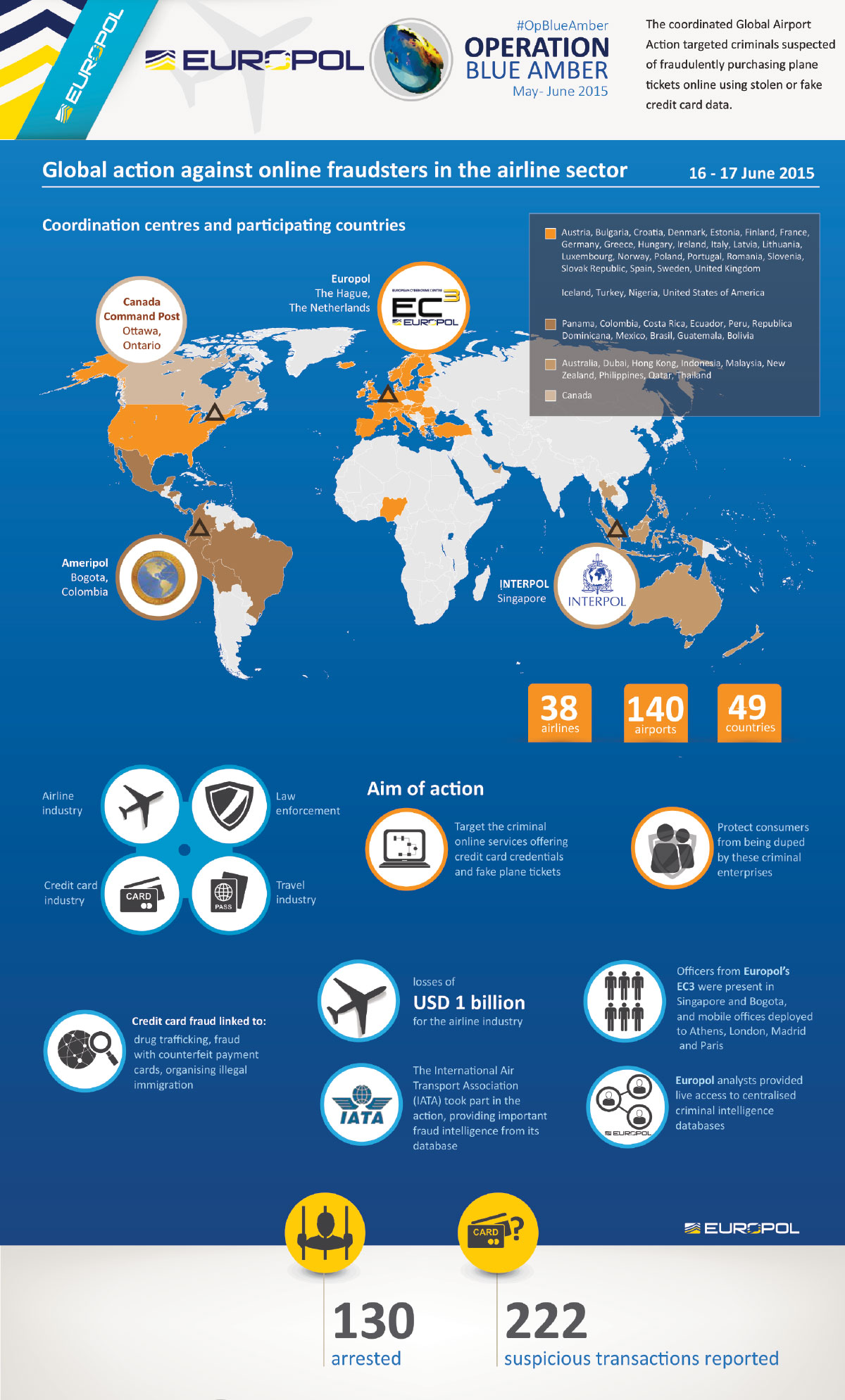
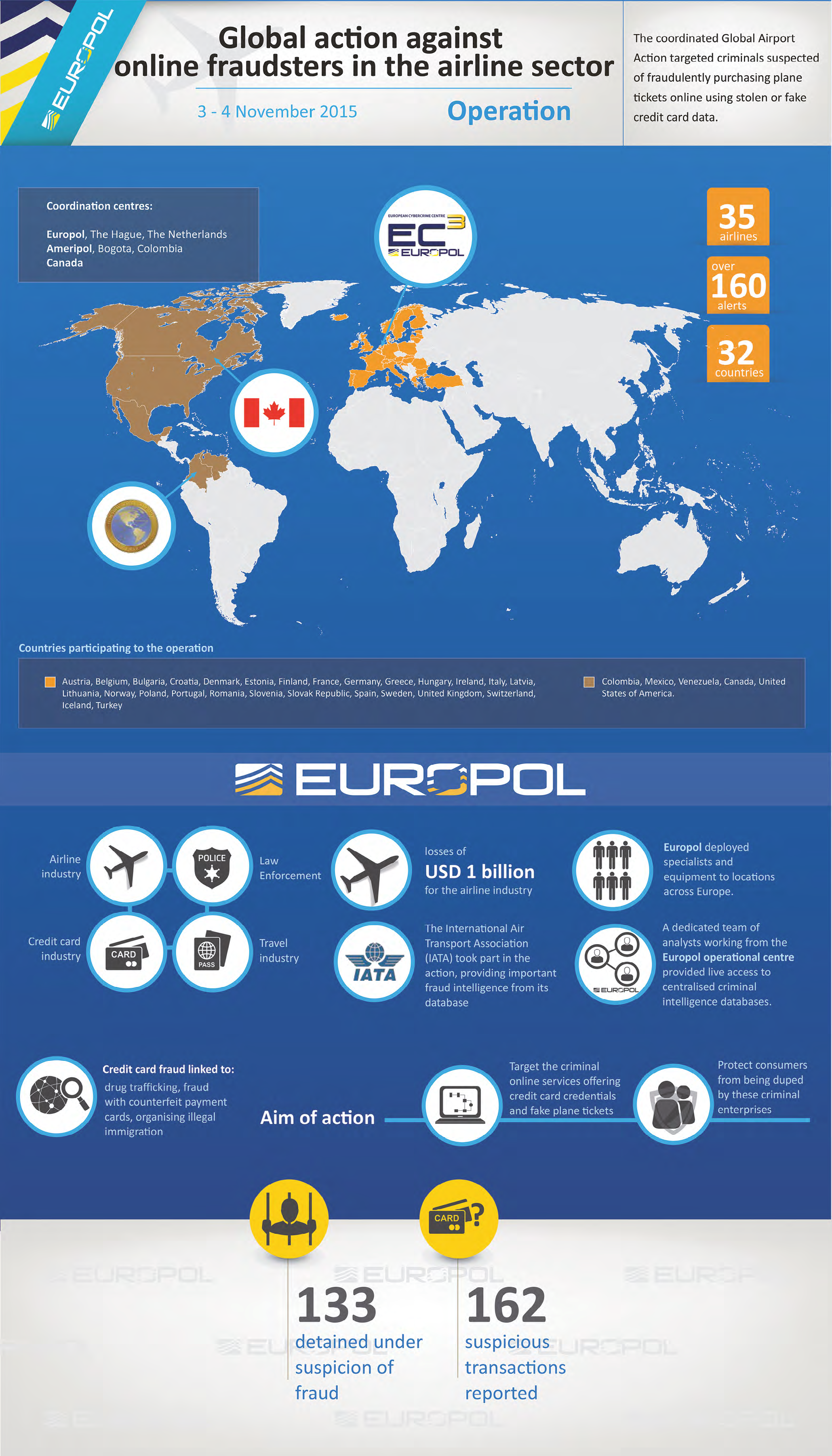
Fraudulent online purchasing of flight tickets using compromised credit card data was the focus of the Global Airline Action Days on 16-17 June and 3-4 November, in which nearly all EU Members States participated as well as many third states. Europol coordinated the activities jointly with Interpol and Ameripol with assistance of Eurojust, Frontex and a large number of private sector partners. Additional support with mobile offices was provided by Europol in nine countries. The actions resulted in the arrest of 263 suspects originating mainly from North and Central Africa but also the Baltic States. The Global Airline Action Days triggered a number of investigations many of which revealed links to other crime areas, such as facilitating illegal immigration, cybercrime, trafficking in human beings and illicit drugs. Moreover, in some cases, fake online travel agencies were used to facilitate the credit card fraud.

Global action against online fraudsters in the ariline sector (16 - 17 June 2015) Global action against online fraudsters in the ariline sector (16 - 17 June 2015)

Global action against online fraudsters in the ariline sector (16 - 17 June 2015)

  1. Based on the analysis of the VAT fraud gap in the VAT gap study commissioned by the European Commission, Implementing the ‘destination principle’ to intra-EU B2B Supplies of Goods, TAXUD/2013/DE/319, 30 June 2015, pp. 13-14. footnote 81